The History of European Casino Hotels
A chronological narrative detailing how European thermal spas, royal patronage, and aristocratic salons formed the foundations of luxury gaming hospitality.
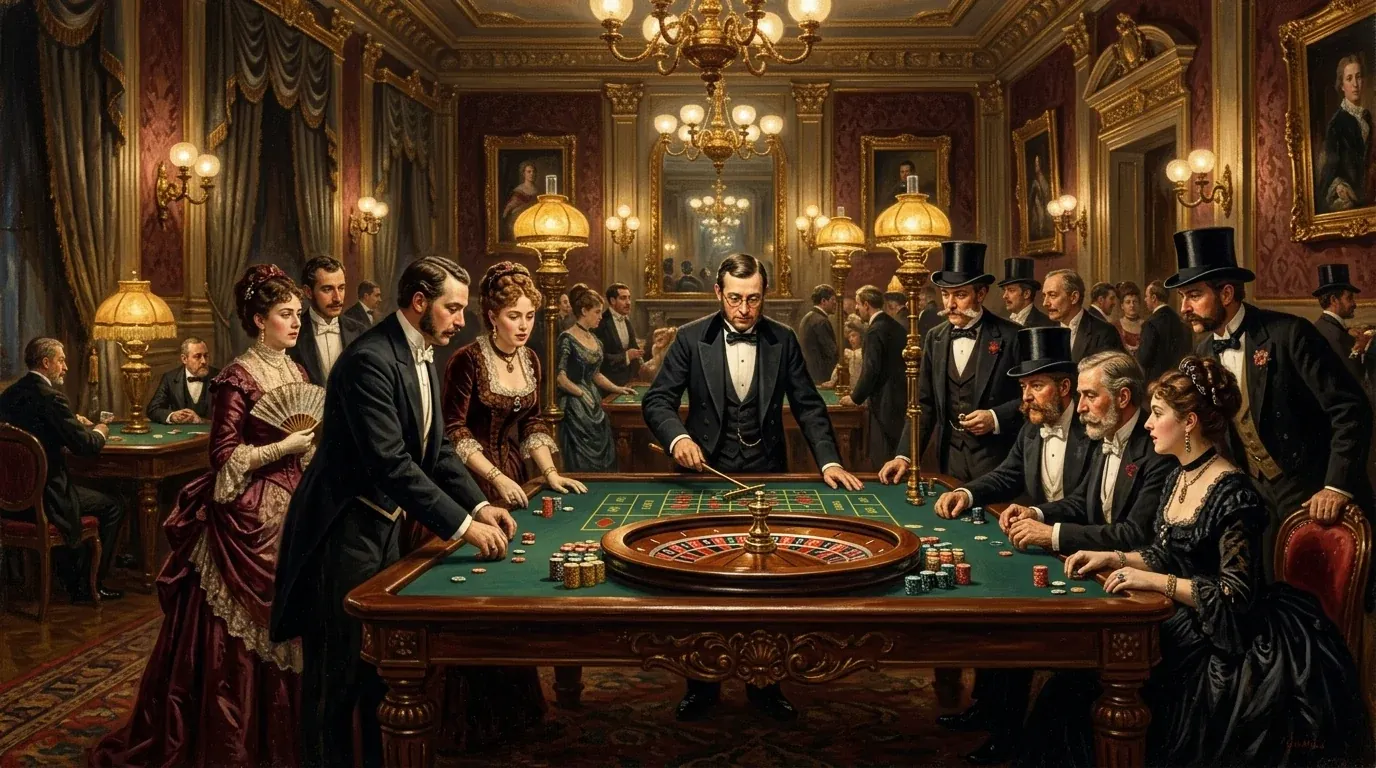
1. The Venetian Origins: Il Ridotto (1638)
The concept of the regulated public gaming salon originated in Venice during the Carnival season of 1638. The Great Council of Venice established Il Ridotto inside the Palazzo Dandolo to bring order to private gambling houses. Guests were required to wear formal three-cornered hats and bauta masks, creating a precedent where gaming was linked inextricably to strict social decorum and aristocratic formality.
2. The 19th-Century Thermal Spa Boom
In the early 1800s, gaming underwent a transformative renaissance in the thermal spa towns of Central Europe. Grand Kurhaus complexes were erected in Baden-Baden, Wiesbaden, and Bad Homburg to entertain Russian grand dukes, European royalty, and wealthy industrialists who traveled south for mineral water cures.
Brothers François and Louis Blanc revolutionized the industry in Bad Homburg by introducing the single-zero roulette wheel in 1843, eliminating the double zero and cutting the house margin in half. This mathematical innovation attracted players from across the globe and established the standard for European roulette.
3. François Blanc & The Belle Époque in Monaco (1863)
When the German Confederation enacted gambling bans in the 1870s, François Blanc responded to an invitation from Prince Charles III of Monaco to oversee the development of the rocky plateau of Spélugues, renamed Monte-Carlo in the Prince's honor.
Blanc oversaw the creation of the Société des Bains de Mer (SBM) and commissioned renowned architect Charles Garnier to design the Opéra and Casino de Monte-Carlo, followed by the opulent Hôtel de Paris in 1864. This established the world's first true luxury casino resort ecosystem, combining palace accommodations, fine dining, opera, and high-stakes gaming.
4. Neutrality, Espionage & Casino Estoril (1930s–1940s)
During World War II, Portugal's neutral status turned the coastal village of Estoril and its Palácio Estoril Hotel into an international epicenter for exiled monarchs (including King Umberto II of Italy and King Carol II of Romania) and secret agents from Britain's MI6 and Germany's Abwehr.
British naval intelligence officer Ian Fleming observed double agent Duško Popov wager monumental sums at the tables of Casino Estoril in 1941, providing Fleming with the exact blueprint for James Bond's debut thriller, Casino Royale.
5. The Modern Era & Integrated European Resorts
In the 21st century, European casino hospitality has evolved along two parallel pathways:
- Heritage Preservation: Landmarks like Hotel Kämp and Casino Helsinki uphold strict state monopoly and player-protection models (Veikkaus), where net gaming revenues are redirected into Finnish society, arts, and sports.
- Integrated Resort Hospitality: Properties like City of Dreams Mediterranean in Cyprus merge multi-hectare entertainment, extensive conference centers, luxury pool lagoons, and grand-scale gaming floors under comprehensive European regulatory standards.